
Recipes
Grilled Burger Recipe: 80/20, Two-Zone Fire & Doneness
Why the Grill Is the King Method for a Burger
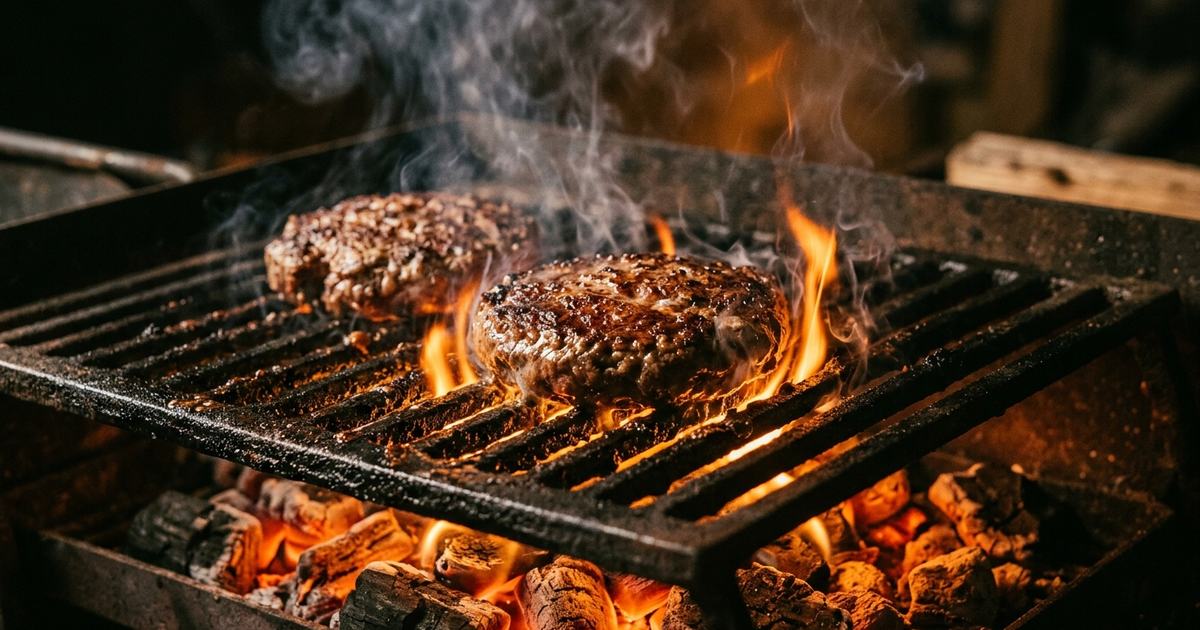
There’s something magical about the moment the meat hits the hot grill. That sizzle, the rising smoke, the aroma that fills everything… For me, as a Venezuelan raised around coals and now at the helm of Valerio Burger Club in Santo Domingo, there’s no more honest way to cook a burger than over fire. The grill not only sears the surface, creating that golden, crispy crust we all love; the fat that drips onto the coals or lava rocks turns into aromatic vapor that infuses the meat with a smoky flavor you can’t replicate on a flat top or skillet. At VBC we live by fire and smoke—this is what we do. And today I’m going to show you how to bring that experience home.
Ingredients (for 4 burgers)
| Ingredient | Amount (oz / g) | Notes |
|---|---|---|
| Ground beef (80/20) | 28 oz / 800 g | Ask your butcher to grind a fresh cut like chuck (muchacho) or brisket. |
| Coarse salt | To taste | Only at the moment you put on the grill. |
| Freshly ground black pepper | To taste | Coarsely ground. |
| Brioche buns | 4 | Soft, slightly sweet, they hold up to the juices. |
| Cheddar cheese | 4 slices | Classic American or aged cheddar. |
| Lettuce | 4 leaves | Crisp, like iceberg or romaine. |
| Tomato | 1 large | Cut into ½ cm slices. |
| Red onion | 1 small | Thin rings. |
| Optional: bacon | 8 strips | Smoked, crispy. |
| Optional: sauce | BBQ, honey mustard, smoked mayo | Pick one with character. |
Key note about the meat: The 80/20 ratio means 80% lean meat and 20% fat. That 20% is essential for a juicy burger on the grill. If you use very lean meat (like 90/10), it will dry out. Also, ask your butcher for fresh grind; pre-packaged supermarket meat is usually more handled and less flavorful. I, Andrés, tell you from experience.
The Meat: 80% of the Result
A true grilled burger starts with the meat. No shortcuts here. Follow these golden rules:
- Coarse and fresh grind: Have your butcher grind a well-marbled cut (like chuck or short rib) on the spot. The coarse grind texture holds juices better.
- Don’t knead: Forget treating the meat like it’s a meatball. Gently shape it with your hands into a disc about 2 cm thick. If you pack it too tight, you’ll get a dry hockey puck.
- Generous portions: 7 oz (200 g) per burger. That’s the sweet spot for a meaty patty that cooks evenly.
- The secret dimple: Use your thumb to press a small depression in the center of each disc. This keeps the burger from puffing up as it cooks, maintaining even thickness.
- Salt ONLY right before the fire: Salt draws out moisture and toughens the meat if it sits too long. Season with coarse salt and black pepper just as you put it on the grill.
- Cold meat, not frozen: Take the meat out of the fridge 15–20 minutes ahead so it’s not ice-cold but still firm. If it’s too cold, it will brown on the outside and stay raw inside.
How to Set Up the Grill: The Two-Zone Method
The key to a perfect grilled burger is creating two heat zones: a direct, intense one for searing, and an indirect one (gentler) for finishing without burning.
If using charcoal:
- Pile the coals on one side of the grill, leaving the other side empty.
- Wait until the coals are covered with gray ash (about 20–30 minutes). Don’t cook over live flames—that’s fire, not grilling.
- The temperature in the direct zone should be around 200–230 °C (400–450 °F).
If using gas:
- Preheat the grill with the lid closed for 10–15 minutes on high.
- Leave one burner on high and the other off (or on low) for the indirect zone.
Mandatory step: Clean the grate with a wire brush, then rub it with a paper towel soaked in vegetable oil (using long tongs) to keep the meat from sticking.
Step by Step on the Grill (7 Foolproof Steps)
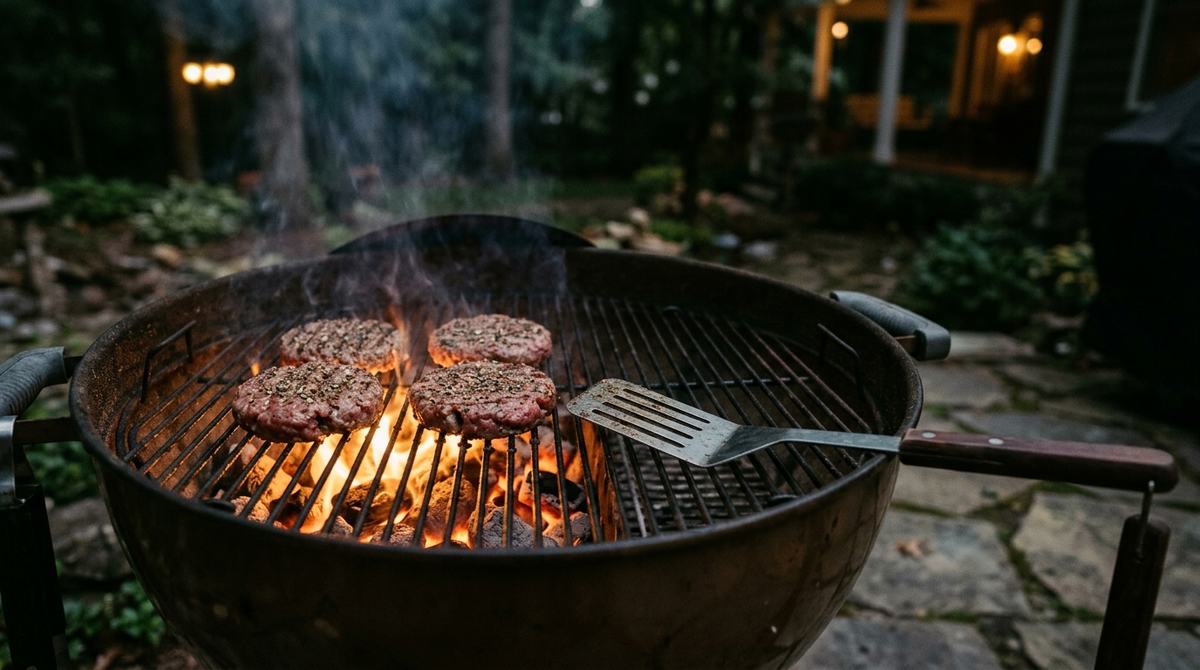
- Sear over direct heat: Place the patties on the hot zone. DO NOT move them for the first 2–3 minutes. You need that golden crust to form.
- Flip ONLY once: Use a wide, firm spatula. Flip only when you see the edges starting to cook and the bottom is golden. One turn, no rushing.
- Never smash: If you press down with the spatula, you’re squeezing the juices straight onto the coals. It’s the most common mistake and the one that ruins a burger most often.
- The magic dimple: You already made it when forming the patties. If you see them starting to dome, press gently with the spatula—but no force.
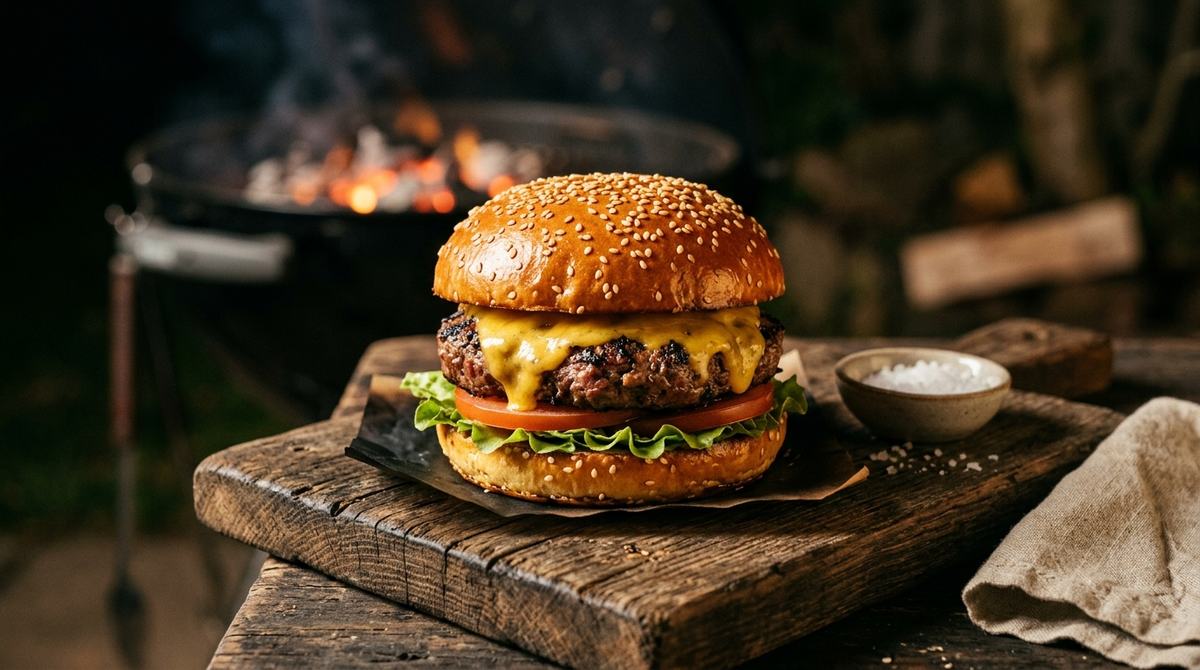
- Cheese at the end with the lid closed: Once you’ve flipped and the meat is almost done (to your preferred doneness), lay the cheese slice on top and close the grill lid for 1 minute. The heat builds up and melts the cheese evenly.
- Toast the buns on the cool zone: When the patties are nearly ready, place the buns (cut side down) on the indirect zone or a cool corner of the grill. Toast for 30–60 seconds, just until lightly golden and warm.
- Rest for 3 minutes: Remove the patties from the grill and let them rest on a plate or rack for 3 minutes. This allows the juices to redistribute so they don’t run out when you take your first bite.
Doneness Temperature Guide
| Doneness | Internal temp (°F) | Internal temp (°C) | Approx. time per side over direct heat |
|---|---|---|---|
| Rare | 125 °F | 52 °C | 2 minutes |
| Medium-rare | 135 °F | 57 °C | 3 minutes |
| Medium | 145 °F | 63 °C | 4 minutes |
| Medium-well | 155 °F | 68 °C | 5 minutes |
| Well done | 160 °F+ | 71 °C+ | 6 minutes |
Safety note: The USDA recommends 160 °F (71 °C) for ground meat. If serving children, pregnant women, or anyone with a compromised immune system, aim for well done. For everyone else, medium-rare to medium is ideal for flavor and texture. I use an instant-read thermometer on every burger I make, and I recommend you have one at home.
Mistakes That Ruin a Grilled Burger
- Smashing with the spatula: I already said it, but I’ll repeat it because it’s mistake #1. The pressure squeezes out juices and fat; the burger dries out and loses flavor.
- Flipping a million times: Leave it alone. Every time you move it, you interrupt the crust formation and cooking becomes uneven.
- No heat zones: If you put all the patties over direct fire and forget the indirect zone, the outside burns and the center stays raw. Always create two zones.
- Cold untoasted buns: A cold, soft bun disintegrates from the juices. Toasting it lightly on the grill gives it structure and an extra smoky touch.
- Too many toppings that bury the meat: A grilled burger is a tribute to the meat. Don’t hide it under mountains of lettuce, tomato, onion, pickles, and sauces. Let the smoky flavor be the star. A good balance: 2–3 toppings max.
The Finishing Touch: Sauces
A grilled burger asks for sauces with character. Don’t drown it in industrial mayo—make something homemade instead. At my house I always have honey mustard (3 parts Dijon mustard, 1 part honey, a pinch of black pepper) or smoked mayo (mayo + a few drops of liquid smoke or smoked paprika). If you love bacon, crumble some crispy strips and mix them into the mayo. Or just a good smoky ketchup. And if you want to step it up, a homemade chimichurri on the meat fresh off the fire or my spicy barbecue sauce to paint the burger in the last minute are winning bets. The key is that the sauce complements, not masks.
At Valerio Burger Club
Our kitchen revolves around fire: grilling and smoking. Every burger we serve in El Millón, Santo Domingo, is the result of years of grill obsession—testing cuts, temperatures, and timings until we found the perfect point. If you want to taste the result of that obsession without having to light charcoal, we welcome you at our location or order delivery. But if you feel like making them at home, follow this recipe and tell me how they turned out. Fire brings us together.
Frequently Asked Questions
What kind of meat is best for grilled burgers?
The best is a mix of chuck (muchacho) and brisket, with 20% fat. Ask your butcher for a fresh coarse grind. Avoid pre-packaged meat, which usually has less fat and more bacteria from handling.
How long do you cook a burger on the grill?
It depends on the doneness you want. For medium-rare (135 °F/57 °C), about 3 minutes per side over direct heat. Always use an instant-read thermometer to be sure. And don’t skip the 3-minute rest.
Charcoal or gas for burgers?
Charcoal gives an unbeatable smoky flavor. Gas is faster and easier to control. At home, whichever you have works—the important thing is the two-zone technique. If you can, use good quality charcoal (not briquettes made of clay, but lump charcoal). Don’t have a grill? You can also get juicy results with my oven-baked burger method.
Why do my burgers turn out dry on the grill?
Almost always for three reasons: meat that’s too lean (less than 20% fat), smashing with the spatula, or cooking too long (overdone). Use a thermometer, form your patties with a dimple, and don’t touch them while they sear.
Should you put egg or breadcrumbs in burger meat?
No, not at all. That mix is perfect for meatballs or kefta, but in a classic burger the meat should be pure: just meat, salt, and pepper. Egg and breadcrumbs change the texture and prevent that golden crust from forming. Trust the fat and the fire.
From the blog to your table
In Santo Domingo? Don't read on an empty stomach.
Order your favorite burger from Valerio Burger Club and we’ll deliver it to your door. Beef ground daily, artisan buns and house-smoked meats.
Keep reading
 Recipes
 Brioche Burger Buns: The Chef's Recipe
How to make brioche burger buns step by step: ingredients in grams, kneading, fermentation, and the egg wash. The soft, golden crumb that holds up to the sauce.
 Recipes
 Homemade Mustard: Easy Recipe with Seeds (and Variations)
How to make homemade mustard from scratch: ingredients, the step-by-step method, the variations (whole-grain, Dijon, honey mustard, spicy) and how to store it.
 Recipes
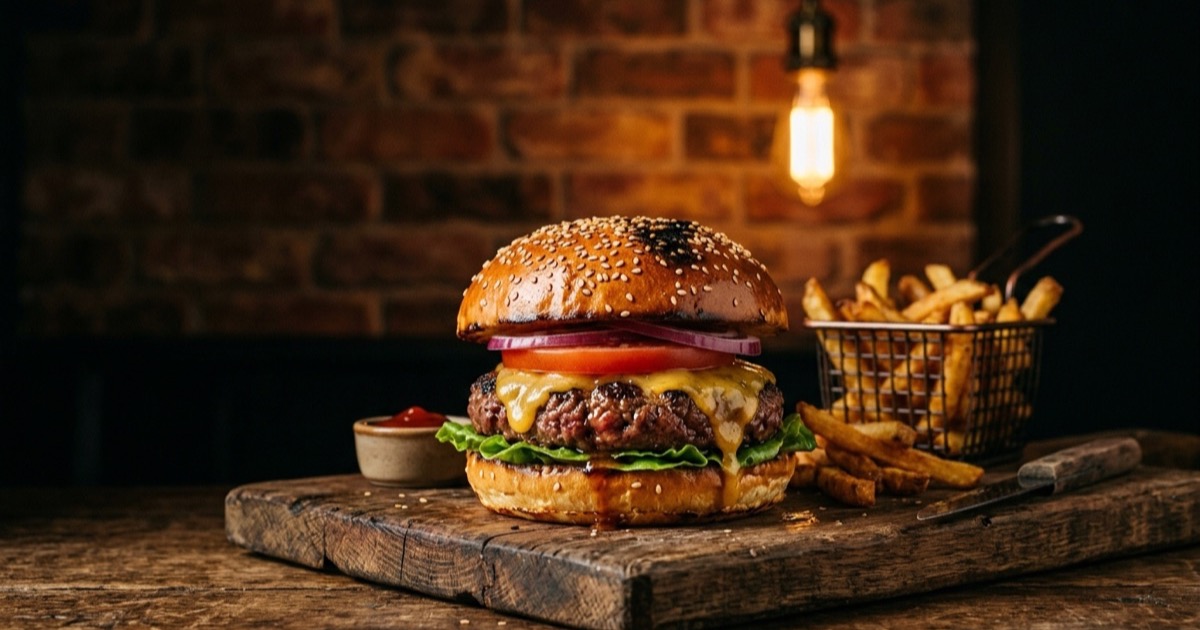
 Air Fryer Burgers: Juicy Patties, Time and Temperature
How to make burgers in an air fryer step by step: the ideal temperature (375°F/190°C), the times for each doneness, and the tips for juicy patties.