
Recipes
Healthy Burger Buns: Whole Wheat Recipe & Comparison
Is the Burger Bun Healthy? The Honest Answer
I’ll be honest with you: when someone asks me if a burger bun is healthy, my chef answer is: it depends. The white industrial bun you find at the supermarket usually has added sugar, low-quality fats, and refined flours that spike the glycemic index. One of those buns runs about ~250-280 kcal per serving and almost zero fiber. It’s not poison, but it’s not doing your health any favors either.
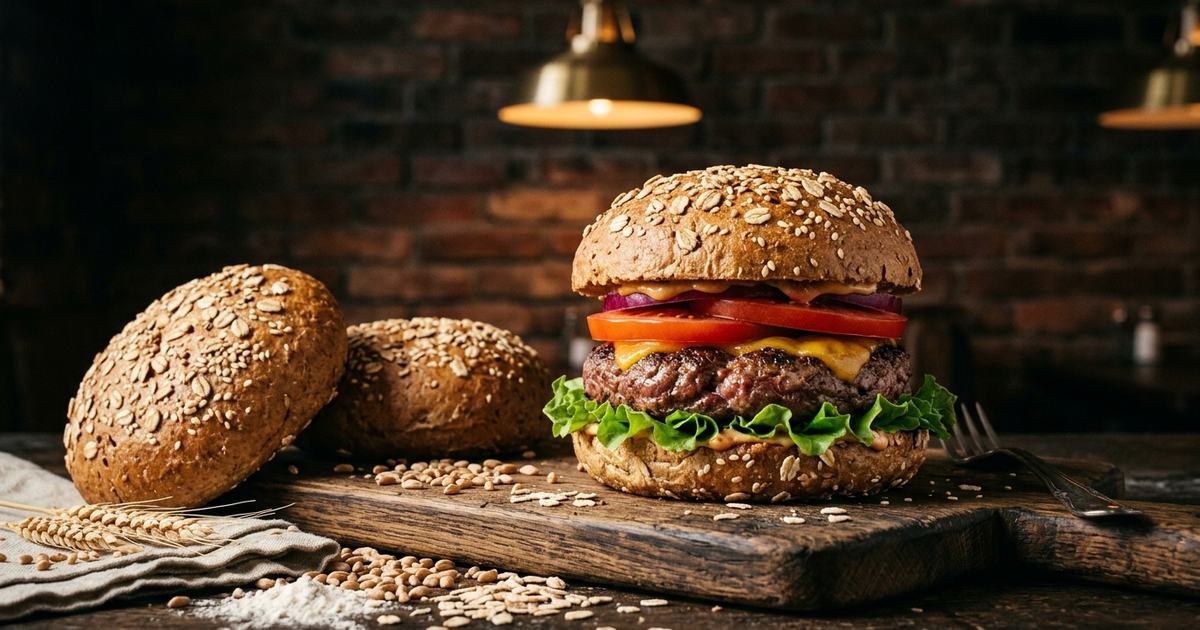
Now—a whole wheat burger bun, sourdough, or one you make at home with ingredients you control completely changes the equation. More fiber, more satiety, fewer blood sugar spikes. The key is ingredient quality, not demonizing bread. At Valerio Burger Club we bake our own brioche buns, so trust me when I say: we know our bread.
What Makes a Burger Bun Healthy (or Not)?
Not all buns are created equal. Here are the factors that determine whether your bun adds or subtracts:
- Refined vs. whole wheat flour: white flour loses fiber and nutrients during refining. Whole wheat keeps the bran and germ, giving you more fiber, B vitamins, and minerals like magnesium and zinc.
- Added sugar: many industrial buns use high-fructose corn syrup or brown sugar to speed fermentation and add color. At home you can use honey, panela, or simply reduce the amount.
- Fats: butter and low-quality vegetable oils (palm, soy) are common in commercial buns. At home you use extra virgin olive oil or quality butter, and you control the amount.
- Additives and preservatives: emulsifiers, stabilizers, dough conditioners… all of that extends the bread’s shelf life but doesn’t improve your health. Homemade bread doesn’t keep as long, but it’s cleaner.
- Portion size: a 100 g bun isn’t the same as a 60 g one. At home you decide the weight.
Chef honesty: bread isn’t the villain. Dosage and quality matter. A well-made homemade brioche with quality butter and fresh eggs can be indulgent but it’s not ultra-processed. The problem is the industrial supermarket bun, loaded with sugar and cheap fats.
Burger Bun Comparison Chart
| Type of Bun | Approx kcal per bun | Fiber | Chef’s Note |
|---|---|---|---|
| White industrial | ~250-280 | Low | The most common, the least interesting. No soul. |
| Homemade brioche | ~280-320 | Low | Indulgent but no additives. Ours at VBC. |
| 100% whole wheat | ~200-230 | High | More satiety, nutty flavor. Ideal if you’re after fiber. |
| Sourdough | ~220 | Medium | Better digestion, slow fermentation, more available nutrients. |
| Oat | ~190-210 | High | Soft and slightly sweet. Perfect for pairing. |
| Gluten-free (rice/yuca) | ~200-250 | Variable | For celiacs, but check the label: sometimes they have more starch than fiber. |
| Bread alternatives (lettuce, portobello, sweet potato) | ~10-80 | — | The lightest option. Tastes different, but it works. |
Recipe: Homemade Whole Wheat Burger Buns (8 Buns)
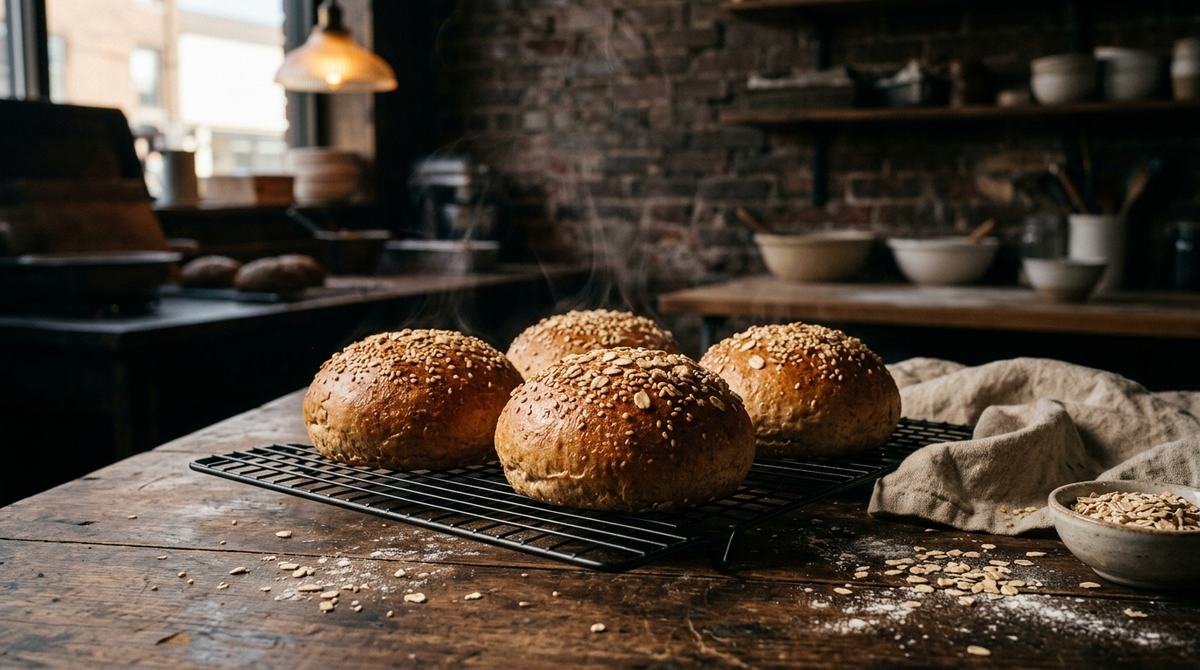
This is my go-to recipe when I want a bun that doesn’t weigh on my conscience or my body. I’ve tweaked it after many trials in the VBC kitchen.
| Ingredient | Amount (oz) | Amount (g/ml) |
|---|---|---|
| Whole wheat flour | 14 oz | 400 g |
| Bread flour (white) | 3.5 oz | 100 g |
| Warm water (95-104°F / 35-40°C) | 9 oz | 260 ml |
| Milk (or plant-based milk) | 2 oz | 60 ml |
| Extra virgin olive oil | 1.5 oz | 45 ml |
| Honey or ground panela | 1 oz | 28 g |
| Active dry yeast | 0.25 oz | 7 g (1 packet) |
| Salt | 0.3 oz | 9 g |
| 1 egg (for wash) | — | — |
| Sesame seeds or rolled oats | — | To taste |
Chef’s note: the 80/20 blend of whole wheat and bread flour is the secret to keeping the bun soft and not brick-like.
Step-by-Step: Homemade Whole Wheat Buns in 8 Steps
- Activate the yeast: in a small bowl, mix the active dry yeast with 2 oz (60 ml) of warm water and the honey. Let sit 5-10 minutes until foamy. If it doesn’t foam, the yeast is dead—start over.
- Mix dry ingredients: in a large bowl, combine the whole wheat flour, bread flour, and salt. Stir with a spoon.
- Knead: add the activated yeast mixture, the remaining warm water, milk, and olive oil. Mix until combined. Then knead on a lightly floured surface for 10 minutes (or 5 minutes in a stand mixer with dough hook). The dough should be smooth and elastic.
- First proof: shape the dough into a ball, place it in a lightly oiled bowl, cover with a damp towel, and let it rest in a warm, draft-free spot for 1 hour or until doubled in size.
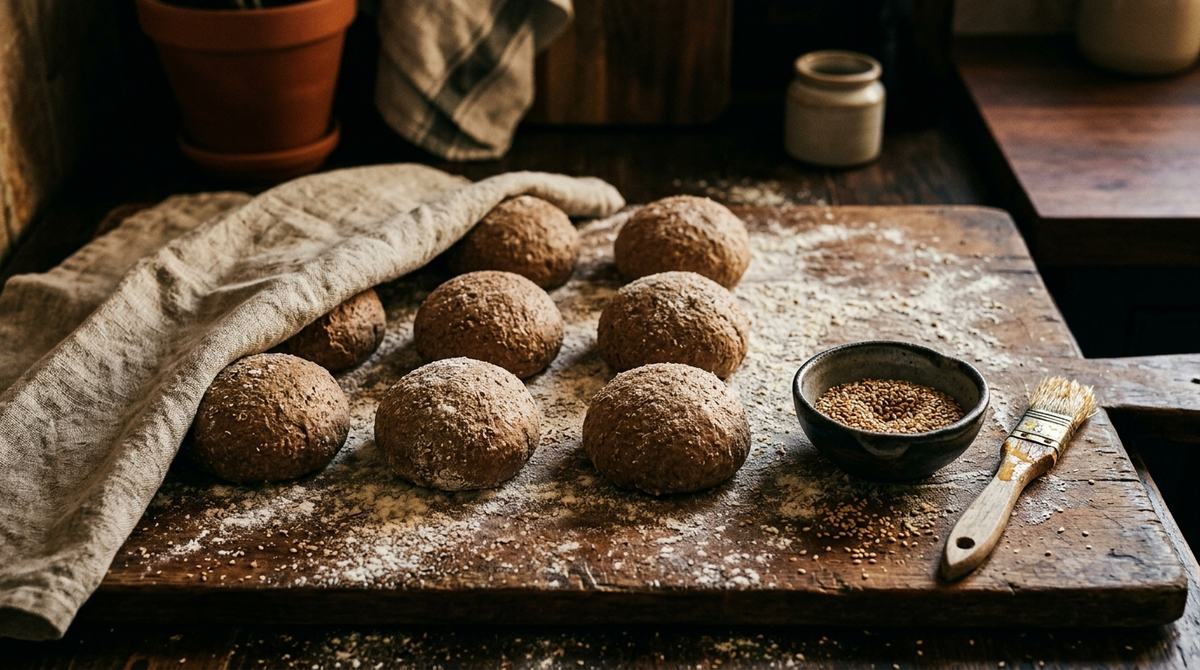
- Divide and shape: gently deflate the dough, divide it into 8 portions of about 3.5 oz (100 g) each. Shape into smooth balls and place on a baking sheet lined with parchment paper, spaced apart.
- Second proof: cover the balls with the towel and let rest for 45 minutes. They should puff up noticeably again.
- Brush and decorate: beat the egg with a tablespoon of water and gently brush the top of each bun. Sprinkle sesame seeds or oats to taste.
- Bake: preheat the oven to 375°F (190°C). Bake for 15-18 minutes until golden brown and they sound hollow when tapped on the bottom.
Chef’s tip: place a small pan with water on the bottom oven rack during the first 5 minutes of baking. The steam keeps the crust soft—just the way we like it at VBC.
Tricks to Keep Whole Wheat Buns from Being Dense
The biggest fear with whole wheat bread is ending up with a rock. Here are my secrets:
- Don’t overdo the whole wheat flour: always blend 80% whole wheat with 20% bread flour (or white bread flour). The extra gluten in bread flour gives structure and fluffiness.
- Generous hydration: whole wheat flour absorbs more liquid. If the dough feels dry, add a couple tablespoons of water. It should be sticky but manageable.
- Knead enough: knead until you pass the “windowpane test”: stretch a piece of dough; it should form a thin membrane without tearing. If it tears, knead 2 more minutes.
- Full proofing, no rushing: don’t cut the resting times short. A slow fermentation develops flavor and texture. If it’s cold, leave the dough in the turned-off oven with the light on.
- Rest covered after baking: when you take the buns out of the oven, cover them with a clean towel for 10 minutes. This keeps the crust from hardening too fast.
What If I Prefer Not to Eat Bread?
I get it—sometimes your body wants something lighter. At VBC we respect all choices. If you want to skip the bun, here are my favorite alternatives: In my guide to no-bun burgers you’ll find three techniques (plated, lettuce wrap, and burger bowl) with exact calorie counts.
- Lettuce wrap: large, sturdy romaine or iceberg leaves. Fresh, crunchy, and ~10 kcal.
- Plated: the burger with its toppings (sautéed veggies, avocado, cheese) served directly on the plate. No bun, no regrets.
- Grilled portobello as “bun”: two large portobello caps, grilled with olive oil and salt, make the “bun”. Meaty texture, umami flavor, and only ~40 kcal each.
And if you want the lightest combo, try this whole wheat bun with my healthy chicken burger—the perfect guilt-free craving duo.
At Valerio Burger Club: Our Bun Is Honest
At VBC we don’t use industrial buns. Our brioche is homemade, long-fermented, and takes no shortcuts. We bake it every morning in our El Millón kitchen, with quality butter, fresh eggs, and flour we select ourselves.
I won’t fool you: our brioche isn’t “light”. It’s indulgent, yes, but it’s honest. No additives, no preservatives, no hidden sugars. That’s our philosophy: quality over quantity, flavor over artifice.
If you want to taste what a burger bun made with respect really means, come see us at Valerio Burger Club in El Millón, Santo Domingo. You can also order delivery. We’ll be waiting for you.
Frequently Asked Questions
What’s the healthiest burger bun?
The healthiest burger bun is 100% whole wheat homemade or sourdough, because it provides more fiber, less sugar, and no additives. If you make it yourself, you control every ingredient. Sourdough also improves gluten digestion.
Does a burger bun make you fat?
No single food makes you fat; it’s all about total calorie context. A whole wheat burger bun at ~200 kcal can be part of a balanced meal. The problem comes when the bun is industrial, oversized, and paired with sugary sauces and fried sides. The dose makes the poison.
Can I make whole wheat buns without a stand mixer?
Yes, absolutely. Kneading by hand takes 10 minutes of work and a little patience, but the result is just as good. The key is developing the gluten: stretch, fold, turn, and repeat. If the dough sticks, oil your hands a bit—don’t add more flour.
How long do homemade burger buns last, and can I freeze them?
Homemade buns keep 2-3 days at room temperature in a paper or cloth bag (never plastic, which softens the crust). You can also freeze them for up to 3 months: wrap each bun individually in plastic wrap, then in a freezer bag. To thaw, leave at room temperature or 10 minutes in a 350°F (180°C) oven.
What bun does Valerio Burger Club use?
At Valerio Burger Club we use homemade long-fermented brioche. We bake it daily in our El Millón kitchen, with butter, eggs, and quality flour. No shortcuts, no additives. It’s an indulgent bun, but an honest one.
From the blog to your table
In Santo Domingo? Don't read on an empty stomach.
Order your favorite burger from Valerio Burger Club and we’ll deliver it to your door. Beef ground daily, artisan buns and house-smoked meats.
Keep reading
 Recipes
 Brioche Burger Buns: The Chef's Recipe
How to make brioche burger buns step by step: ingredients in grams, kneading, fermentation, and the egg wash. The soft, golden crumb that holds up to the sauce.
 Recipes
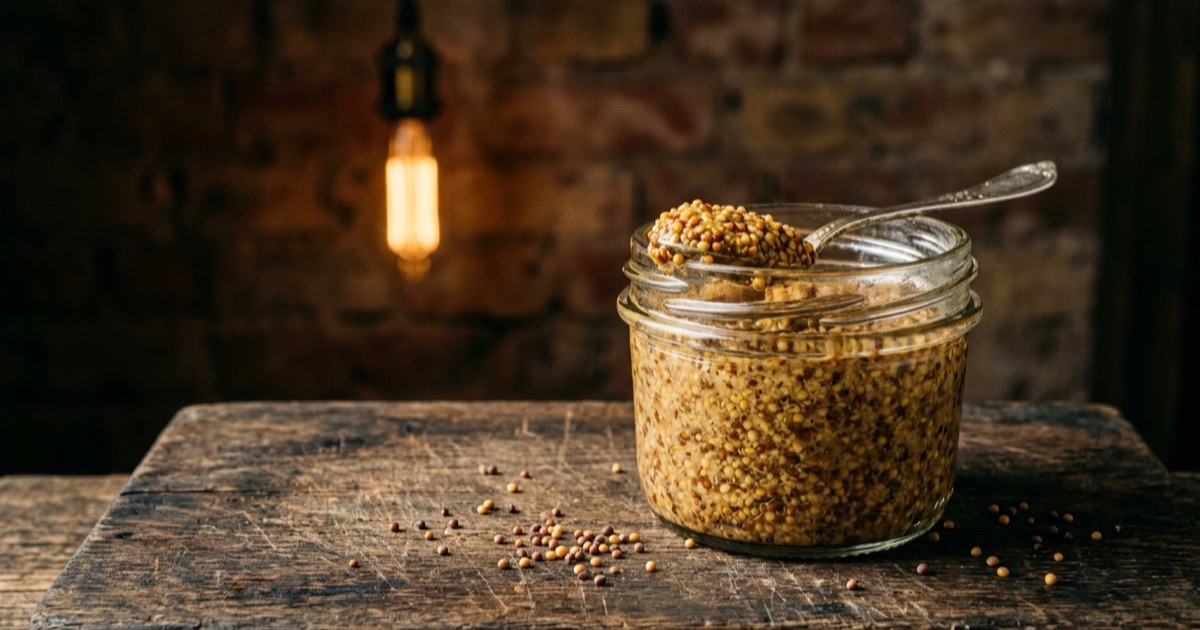
 Homemade Mustard: Easy Recipe with Seeds (and Variations)
How to make homemade mustard from scratch: ingredients, the step-by-step method, the variations (whole-grain, Dijon, honey mustard, spicy) and how to store it.
 Recipes
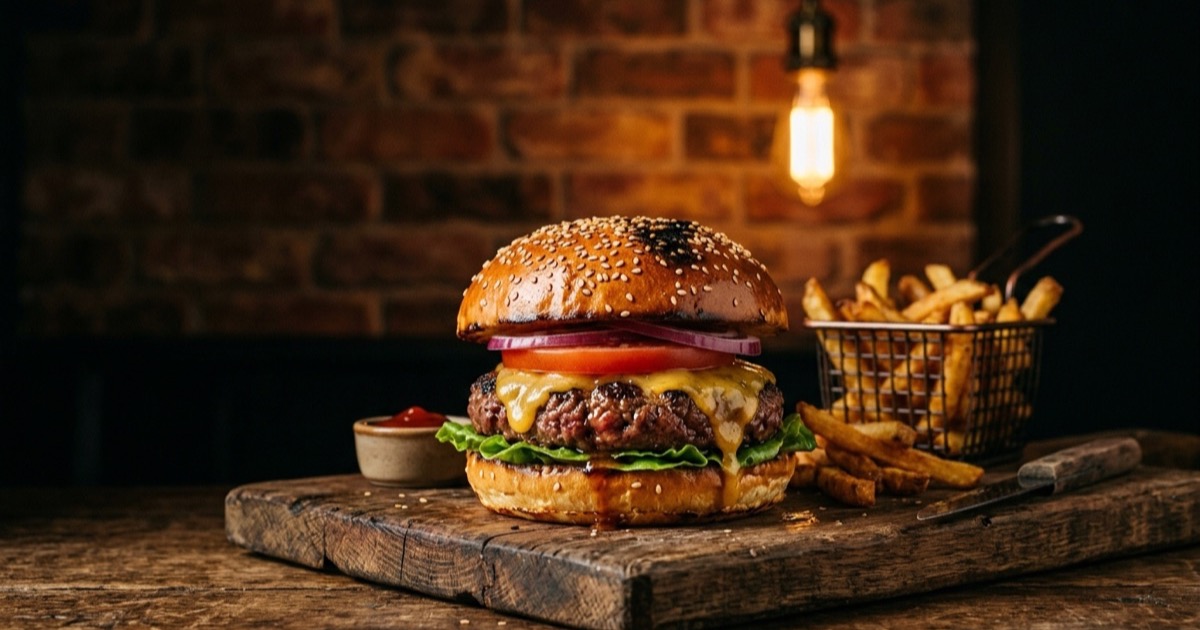
 Air Fryer Burgers: Juicy Patties, Time and Temperature
How to make burgers in an air fryer step by step: the ideal temperature (375°F/190°C), the times for each doneness, and the tips for juicy patties.