
Recipes
Burger Sauce: The Ketchup, Mayo & Mustard Mix
The Holy Trinity of the Burger: Mayo, Ketchup, and Mustard
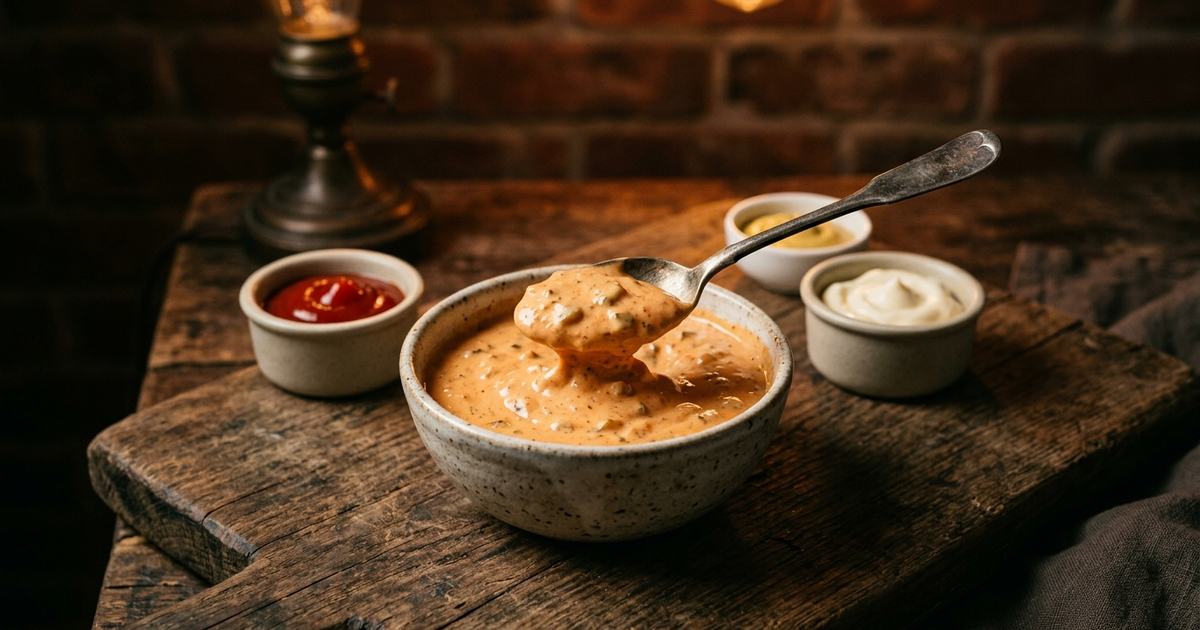
If you’ve ever wondered what the sauce made from mayo, ketchup, and mustard is called, the short answer is: it depends on the country and what’s in it. The blend of these three basic sauces goes by different names: salsa rosada or salsa golf (when it’s just mayo and ketchup, no mustard), fry sauce in the United States (mayo + ketchup + spices), and burger sauce or special sauce (when it includes all three plus pickles). The classic ratio I use in my kitchen is 2 parts mayo, 1 part ketchup, and ½ part mustard. That gives you the perfect balance of creaminess, sweetness, and tangy bite.
The Three Mother Sauces of the Burger
Before we start mixing, let’s understand each one on its own. They’re the pillars of any self-respecting burger.
Ketchup: Sweet-Tangy with Umami
Modern ketchup was born from Asian kê-tsiap, a fermented fish sauce that sailors brought to Europe. Over time, in the United States, it evolved into the tomato version we know today: thick, sweet, slightly tangy, with a touch of umami thanks to vinegar and spices.
When to use it solo: on a simple burger with grilled beef, cheddar cheese, and pickles. Ketchup adds juiciness and a contrast that enhances the flavor of the meat.
Mayo: The Fat That Binds It All Together
Mayonnaise is an emulsion of egg and oil (with a splash of vinegar or lemon). Its rich, spreadable texture and neutral flavor make it the perfect vehicle for any other ingredient. Without it, compound sauces would have no body.
When to use it alone: on a crispy chicken burger or a thin smash burger, where mayo adds moisture without masking the flavor of the meat.
Mustard: The Tangy Heat That Cuts Through the Fat
American yellow mustard is the queen of burgers: its acidity and mild heat cut through the fat of the cheese and meat. Dijon mustard is more refined and less aggressive; whole grain mustard adds texture. Each has its moment.
When to use it alone: on a hot dog or a Chicago-style burger, where mustard takes center stage alongside pickle relish.
What the Blend Is Called (Depending on the Country and What’s in It)
Here’s a table with the most common names for mayo and ketchup blends (with or without mustard) in different regions:
| Name | What’s in It | Where It’s Used |
|---|---|---|
| Salsa rosada / salsa golf | mayo + ketchup (2:1) | Latin America (invented in Argentina by Nobel Prize winner Luis Federico Leloir in the 1920s, in Mar del Plata) |
| Fry sauce | mayo + ketchup + spices | Utah and the Western U.S. |
| Burger sauce / special sauce | mayo + ketchup + mustard + pickles | Burger joints worldwide |
| Salsa bambi | mayo + ketchup | Venezuela and the Caribbean (very popular with tequeños and fries) |
| Marie Rose | mayo + ketchup + Worcestershire sauce + lemon | United Kingdom (classic for seafood and burgers) |
The Recipe: Three-Ingredient Burger Sauce (The Definitive One)
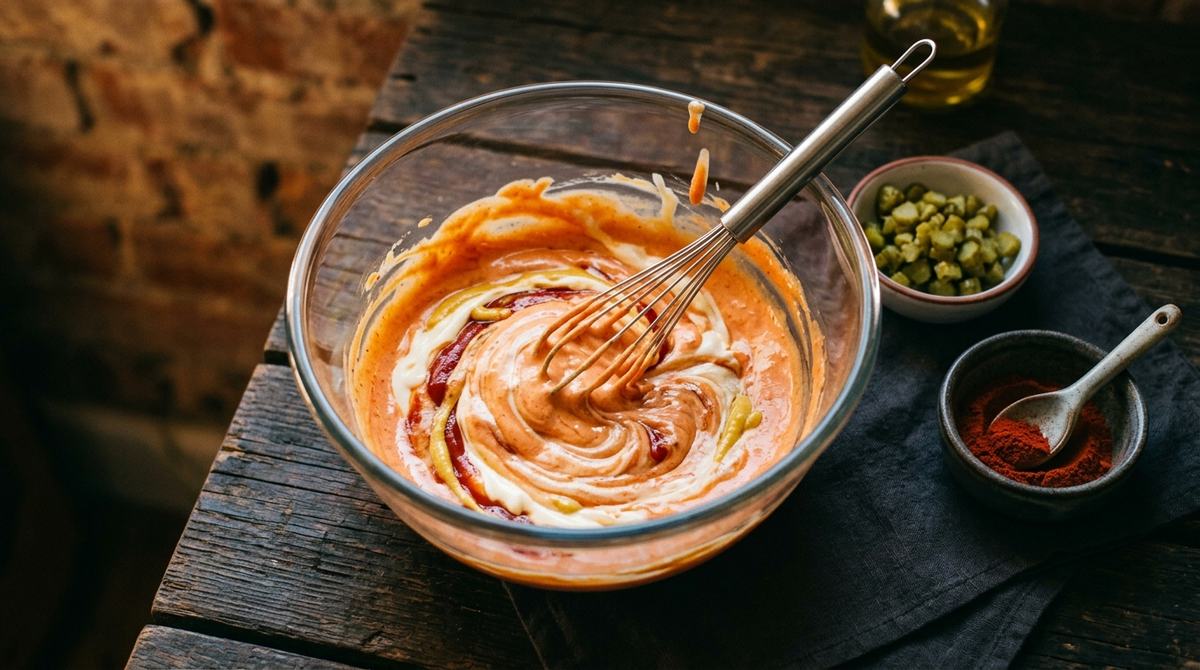
This is the blend I make at home, and it’s very close to what we serve at Valerio Burger Club (though our VBC Special Sauce has its secret touch). The quantities are for a batch that yields about 300 ml, enough for 6–8 burgers or for dipping fries.
| Ingredient | Amount |
|---|---|
| Mayonnaise | 6 oz (170 g) |
| Ketchup | 3 oz (85 g) |
| Yellow mustard | 1½ oz (42 g) |
| Finely chopped sweet pickles | 1 oz (28 g) |
| Pickle brine | 1 teaspoon (5 ml) |
| Onion powder | ½ teaspoon |
| Smoked paprika | ¼ teaspoon |
| Pinch of sugar (optional) | to taste |
Preparation in 4 steps:
- Mix all the ingredients in a bowl with a whisk until smooth and uniform.
- Taste and adjust: if you want more tang, add a few drops of vinegar; if you prefer it sweeter, add a little sugar.
- Rest: cover the bowl and let it rest in the fridge for at least 30 minutes. The flavors will meld, and the sauce will thicken slightly.
- Bottle: transfer it to a squeeze bottle for easy serving right on the burger or alongside the fries.
Ratios for Every Use
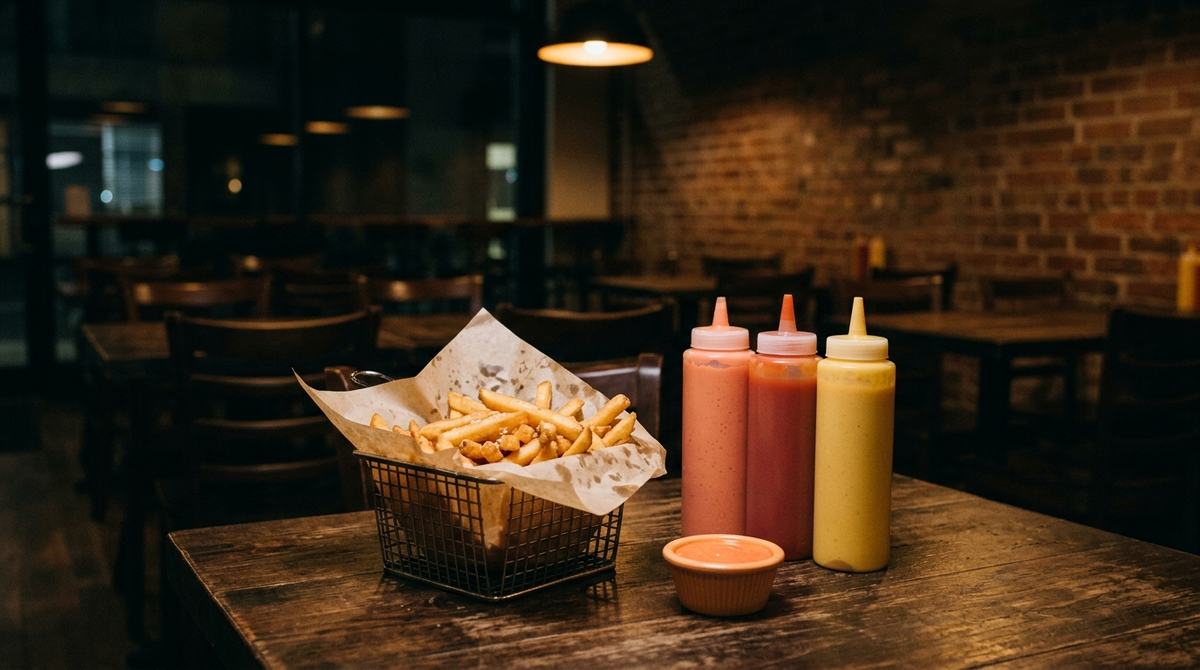
Not all blends are the same. Depending on what you’re pairing it with, you’ll want to adjust the ratios:
| Use | Mayo:Ketchup:Mustard Ratio | Result |
|---|---|---|
| For dipping fries | 2:1:0 | Creamy and sweet, no mustard |
| For a classic burger | 2:1:0.5 | Balanced, the most versatile |
| For hot dogs | 1:1:1 | More mustard, more punch |
| For cold sandwiches | 3:1:0.5 | More spreadable, mild |
Level Up: Homemade Versions and Variations
Once you’ve mastered the base, you can play around with these twists:
- Homemade smoked ketchup: add ½ teaspoon of smoked paprika and a tablespoon of molasses to regular ketchup.
- Garlic mayo: mix 1 pressed garlic clove into the mayo before adding the rest.
- Honey mustard (3:1): substitute Dijon mustard for yellow mustard and add a teaspoon of honey. Ideal for chicken burgers.
- Spicy version: add 1 teaspoon of sriracha or finely chopped jalapeño.
- Vegan version: use vegan mayo (soy- or aquafaba-based) and make sure the ketchup and mustard have no animal-derived ingredients.
Want to keep exploring sauces? The garlic version is in my garlic mayo with store-bought mayonnaise, the 100% plant-based variant is in my sauce for veggie burgers, and if that homemade smoked ketchup caught your eye, my spicy barbecue sauce is the next step.
At Valerio Burger Club
Our VBC Special Sauce comes from the same family as these blends, but with our secret house touch (no, we’re not giving it away here). What I can tell you is that you’ll find it on our menu, starting with La Clásica del Club. Come try it at El Millón, Santo Domingo, or order delivery through our usual channels. I’ll be waiting for you with a burger and that sauce that wins hearts.
Frequently Asked Questions
What is the sauce made of mayo, ketchup, and mustard called?
It depends on the country and the exact ingredients. If it’s just mayo and ketchup, it’s called salsa rosada or salsa golf (Latin America) or fry sauce (U.S.). If it also includes mustard and pickles, it’s known as burger sauce or special sauce.
What ratio do I use for salsa rosada?
The classic ratio is 2 parts mayo to 1 part ketchup. No mustard. It’s widely used in Venezuela (salsa bambi) and Argentina.
How long does the mix last in the fridge?
In an airtight jar, the sauce keeps perfectly between 5 and 7 days. All three bases (mayo, ketchup, and mustard) are stable thanks to the vinegar and oil. If you see it separate, just shake it before using.
Ketchup, catsup, or cátsup: what’s the difference?
None. They’re just variants of the same name. Catsup is the old English spelling, ketchup is the most common today, and cátsup is a Spanish adaptation. In my kitchen, I use the term ketchup, but they all refer to the same product.
Which mustard is best for burger sauce?
For a classic burger, American yellow mustard is the best choice: it has just the right balance of acidity and heat. If you’re after a more refined profile, you can use Dijon mustard, but cut the amount in half since it’s stronger. Whole grain mustard works well on gourmet burgers with bold flavors.
– Chef Andrés Valerio, Valerio Burger Club
From the blog to your table
In Santo Domingo? Don't read on an empty stomach.
Order your favorite burger from Valerio Burger Club and we’ll deliver it to your door. Beef ground daily, artisan buns and house-smoked meats.
Keep reading
 Recipes
 Brioche Burger Buns: The Chef's Recipe
How to make brioche burger buns step by step: ingredients in grams, kneading, fermentation, and the egg wash. The soft, golden crumb that holds up to the sauce.
 Recipes
 Homemade Mustard: Easy Recipe with Seeds (and Variations)
How to make homemade mustard from scratch: ingredients, the step-by-step method, the variations (whole-grain, Dijon, honey mustard, spicy) and how to store it.
 Recipes
 Air Fryer Burgers: Juicy Patties, Time and Temperature
How to make burgers in an air fryer step by step: the ideal temperature (375°F/190°C), the times for each doneness, and the tips for juicy patties.