
Recipes
Chimichurri Sauce: The Chef's Authentic Recipe (for Grilling & Burgers)
The Chimichurri Sauce That Transforms Any Grill
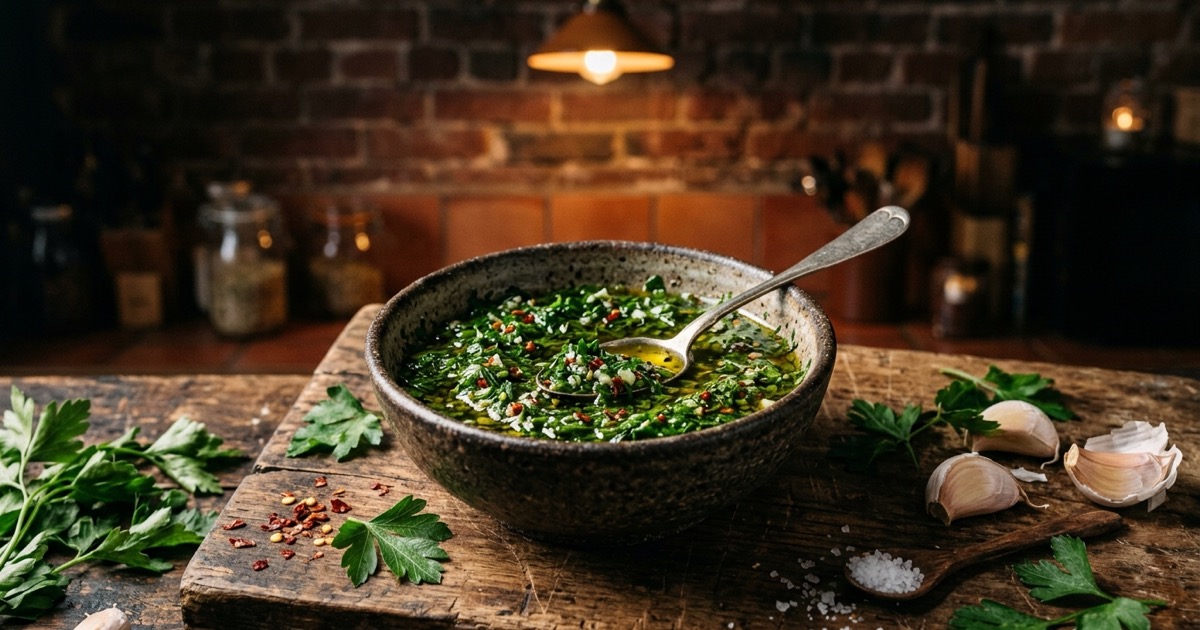
If there’s one sauce that takes me straight to the best grill memories, it’s chimichurri. That vibrant mix of fresh parsley, garlic, olive oil, and a spicy kick that awakens the senses. At Valerio Burger Club, where every detail counts, chimichurri isn’t just any side—it’s the touch that elevates our grilled burgers, bathes them in freshness, and gives them that character that sets us apart. Best of all, it’s made without cooking, in minutes, with ingredients you probably already have at home.
Today I want to share with you my go-to recipe, the one we use at the club and the one I’ve perfected over the years. It doesn’t matter if you’re making a juicy churrasco, a picaña with its golden fat cap, or an artisan burger: this green sauce is the perfect ally. Let’s go step by step, with love and chef’s precision.
Ingredients
The table below is the base. The quantities are for approximately 1½ cups (360 ml) of chimichurri, enough for several meals.
| Ingredient | Quantity |
|---|---|
| Fresh parsley (leaves only, well washed and dried) | 1 packed cup · 1 oz (28 g) |
| Garlic (medium cloves, peeled) | 4-5 cloves · 0.6 oz (17 g) |
| Dried oregano (preferably whole or crumbled) | 1 tablespoon · 0.1 oz (3 g) |
| Red pepper flakes or dried red chili | 1-2 teaspoons · 0.1 oz (3 g) |
| Red wine vinegar | ¼ cup · 2 oz (60 ml) |
| Extra-virgin olive oil | ½ cup · 4 oz (120 ml) |
| Salt (preferably coarse or flaky) | 1 teaspoon · 0.2 oz (5 g) |
| Warm water | 2 tablespoons · 1 oz (30 ml) |
| Fresh cilantro (optional, for Caribbean version) | ¼ cup · 0.25 oz (7 g) |
| Sweet paprika or roasted red bell pepper (optional, for red chimichurri) | 1 tablespoon · 0.2 oz (5 g) |
The Secret to a Good Chimichurri
Before you get your hands dirty, I want to tell you what makes the difference between an ordinary chimichurri and one that really hits:
- Chop by hand, don’t use a blender. Texture is key. The parsley and garlic should be felt in the mouth, not be a purée. The blender oxidizes the herbs and robs them of freshness.
- The acid-oil balance is sacred. Red wine vinegar provides acidity that cuts through the meat’s fat; olive oil softens and coats. The 2:1 ratio (oil:vinegar) is my starting point.
- Resting is mandatory. Chimichurri needs time for the flavors to meld. Minimum 2 hours at room temperature; ideally, overnight in the fridge. The magic happens when the garlic and oregano fuse with the oil.
- Herbs well dried. Parsley and cilantro must be completely dry after washing. Extra water dilutes the sauce and speeds up fermentation.
- Raw garlic in moderation. Garlic is the soul, but if you overdo it, it dominates everything. With 4-5 cloves you have enough for it to be felt without being aggressive.
Step by Step
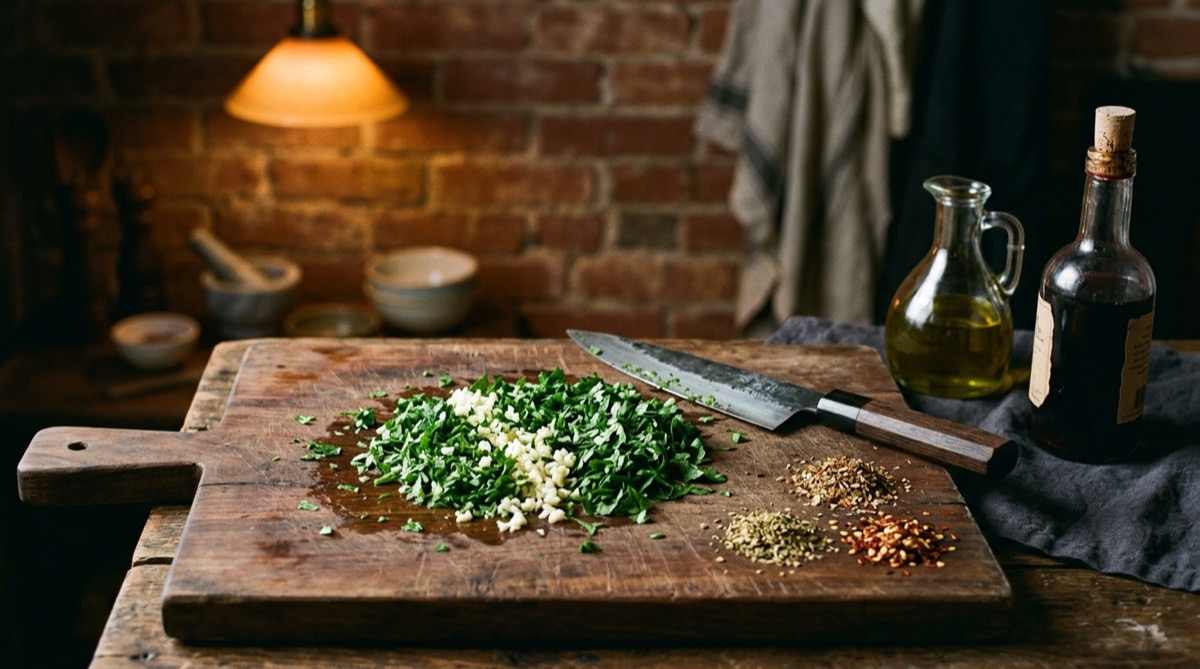
Follow this sequence and you’ll have a professional-grade chimichurri.
- Prepare the herbs. Wash the parsley (and cilantro if using) with cold water, dry it very well with paper towels or a salad spinner. Separate the leaves from the thick stems and chop them finely with a sharp knife. Don’t crush them; aim for a uniform chop, almost like a tabbouleh.
- Chop the garlic. Peel the cloves and cut them into thin slices, then into strips, and finally into very small cubes. If you prefer a milder flavor, remove the central germ from the garlic.
- Mix the dry ingredients. In a medium bowl, combine the chopped parsley, garlic, dried oregano, red pepper flakes, and salt. Stir with a spoon to distribute evenly.
- Hydrate the mixture. Add the warm water and red wine vinegar. Mix well. The water helps the herbs release their essential oils, and the vinegar starts to macerate the garlic. Let it rest for 5 minutes.
- Incorporate the oil. Pour the olive oil in a stream while stirring gently. Don’t whisk or over-emulsify; just integrate. The oil should float slightly over the mixture.
- Rest and adjust. Taste the sauce with a piece of bread or a small spoon. If it needs more salt, add pinches. If you want more acidity, a few drops of vinegar. If you prefer more heat, add more flakes. Cover the bowl with plastic wrap and let it rest at least 2 hours at room temperature.
- Store and enjoy. After resting, transfer the chimichurri to a clean glass jar. If refrigerating, take it out 15-20 minutes before using so the oil regains fluidity.
Variations
Red Chimichurri
Add 1 tablespoon of sweet paprika (or a roasted red bell pepper, peeled and finely chopped) along with the parsley. The color changes to an intense orange hue and the flavor becomes slightly smoky. Ideal for picaña and ribs.
Cilantro Version (Venezuelan Touch)
Replace half the parsley with fresh chopped cilantro. The result is more aromatic, with that Caribbean touch I love so much. In Venezuela we call it “green chimichurri” and use it on arepas and grills. At Valerio Burger Club, this version accompanies our beef burgers with smoked cheese.
Spice Level
Adjust the red pepper flakes according to your tolerance. From a pinch (mild) to 2 teaspoons (fire). If you want a more complex heat, use Venezuelan sweet spicy chili or ground árbol chili.
For Spreading vs. For Dipping
If you want a thicker sauce for spreading on bread or over meat, reduce the oil to ⅓ cup (2.7 oz · 80 ml). For dipping (as a dip), keep the original recipe or even add an extra splash of oil.
What to Eat It With
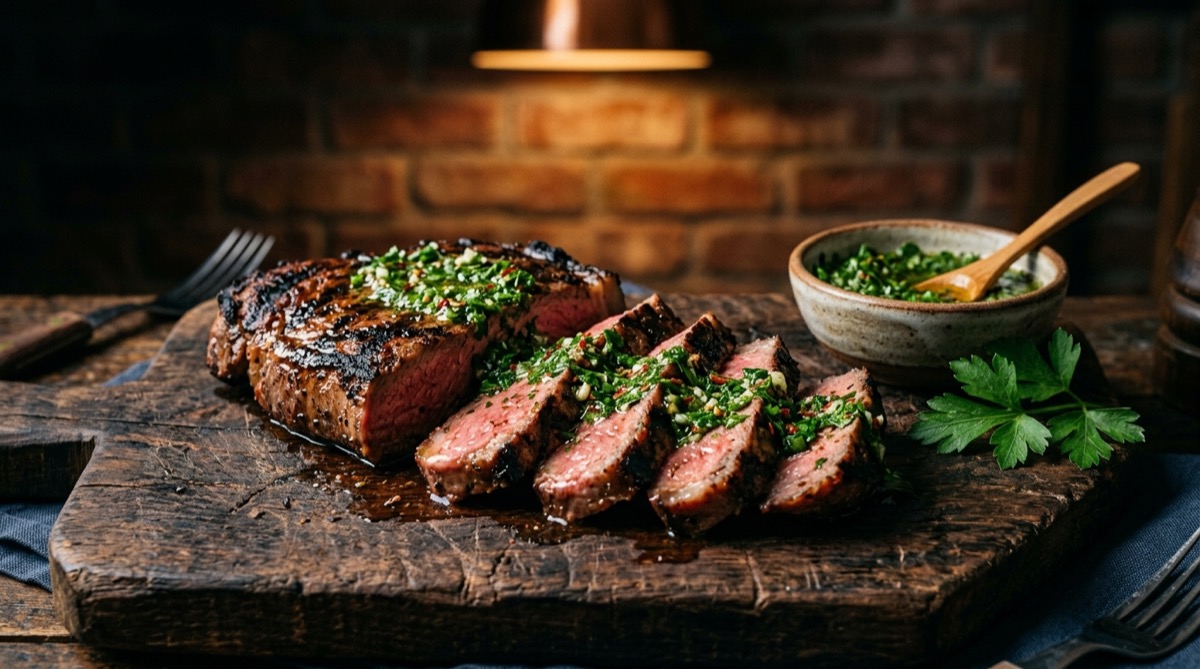
Chimichurri is the most versatile companion on the grill. Here are some ideas:
- Churrasco and picaña: The classic combination. The acidity cuts the fat and the herbs enhance the meat’s flavor.
- Grilled burgers: At Valerio Burger Club we use it as the main sauce on our burgers, especially with provolone cheese and caramelized onion. Try it at home: a couple of spoonfuls over the hot patty.
- Roasted or grilled chicken: Chimichurri brings life to breasts and thighs. Let it marinate for 30 minutes before cooking.
- Grilled vegetables: Eggplant, bell peppers, zucchini, or mushrooms. A touch of chimichurri after grilling transforms them.
- Toasted bread or potatoes: Spread on a slice of crusty bread or use as a dip for rustic french fries.
Storage
Chimichurri improves with the days, as long as you store it well. Place it in a glass jar with an airtight lid and make sure the oil completely covers the herbs (if you see them peeking out, add a splash of olive oil). In the refrigerator it keeps for up to 2-3 weeks without losing quality. Do not freeze it, because the herbs oxidize and lose texture. Before using, take it out 15 minutes ahead so the oil flows, and stir well.
Frequently Asked Questions
What Does Authentic Chimichurri Contain?
The base is fresh parsley, garlic, dried oregano, red pepper flakes, red wine vinegar, olive oil, and salt. Warm water is optional but recommended to hydrate the herbs. It does not contain onion, tomato, or mustard. That’s the traditional Argentine-Uruguayan recipe, and that’s where we start.
Blender or Knife?
Knife, always. The blender oxidizes the herbs, heats them, and turns them into a homogeneous paste that loses the freshness and texture that characterizes chimichurri. If you’re in a hurry, chop by hand as finely as you can. The result is worth the effort.
How Long Does Chimichurri Last?
In the refrigerator, well covered with oil, it lasts 2 to 3 weeks. The flavor intensifies after 24 hours of resting. If you see the oil separate or the herbs darken, don’t worry: it’s normal. Stir before using.
Is Chimichurri Spicy?
It depends on the amount of chili you use. The traditional recipe is mildly spicy, just to give a touch of heat without burning. You can adjust it to your taste: from no heat (omit the flakes) to very spicy (double them or add fresh chopped chili). And where does it shine brightest? On an Argentinian-style grilled burger with provoleta and salsa criolla.
What’s the Difference Between Chimichurri and Similar Sauces?
Chimichurri differs from pesto (which has basil, pine nuts, and cheese) and from mojo (which is more citrusy and has cumin). It’s also different from Italian gremolata (without oil or vinegar). Its character is more acidic and herbaceous, designed to accompany fatty meats. Don’t confuse it with mayonnaise- or yogurt-based sauces; chimichurri is pure grill essence. If you want to explore its relatives, I put together a full rundown of 10 chimichurri alternatives and which meat each one pairs best with.
From the blog to your table
In Santo Domingo? Don't read on an empty stomach.
Order your favorite burger from Valerio Burger Club and we’ll deliver it to your door. Beef ground daily, artisan buns and house-smoked meats.
Keep reading
 Recipes
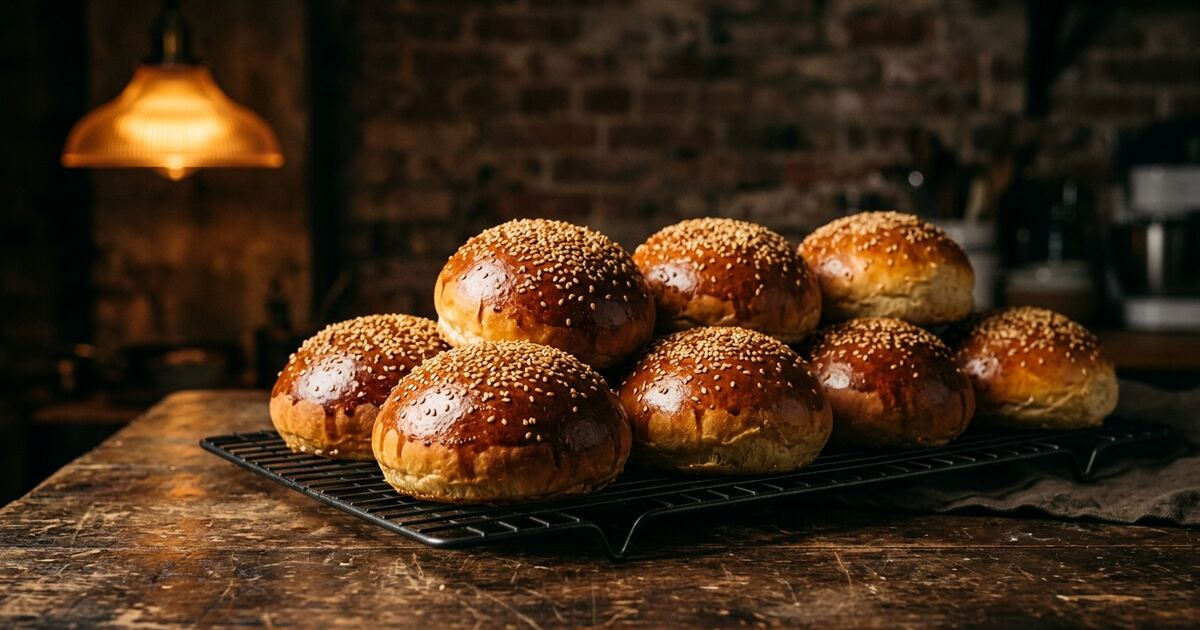
 Brioche Burger Buns: The Chef's Recipe
How to make brioche burger buns step by step: ingredients in grams, kneading, fermentation, and the egg wash. The soft, golden crumb that holds up to the sauce.
 Recipes
 Homemade Mustard: Easy Recipe with Seeds (and Variations)
How to make homemade mustard from scratch: ingredients, the step-by-step method, the variations (whole-grain, Dijon, honey mustard, spicy) and how to store it.
 Recipes
 Air Fryer Burgers: Juicy Patties, Time and Temperature
How to make burgers in an air fryer step by step: the ideal temperature (375°F/190°C), the times for each doneness, and the tips for juicy patties.