
Guides
Chicken Burger: The Complete Guide (Juicy, Healthy or Crispy)
The Chicken Burger: The Complete Guide to Understanding and Mastering It at Home
For years, the chicken burger was that dish you ordered when you didn’t want to take a risk—the “Plan B” of menus. But let me tell you something: when done right, it’s one of the juiciest, most versatile, and most flavorful preparations out there. At Valerio Burger Club we’re obsessed with the product, and the chicken burger is no exception: it’s a blank canvas that works for everything from light, healthy versions to crunchy texture explosions.
Why is it gaining so much ground? Because it’s lighter than beef, high in protein, adaptable to a thousand styles—from the grill to the oven—and if you pick the right meat and cook it with care, it turns out tender and full of flavor. In this master guide, I’m going to tell you everything you need to know to master it at home, from choosing the meat to the mistakes that dry it out or break it apart. And at the end, I’ll walk you through specific guides for each style. Let’s get started.
Breast, Thigh, or a Mix: The Foundation of Everything
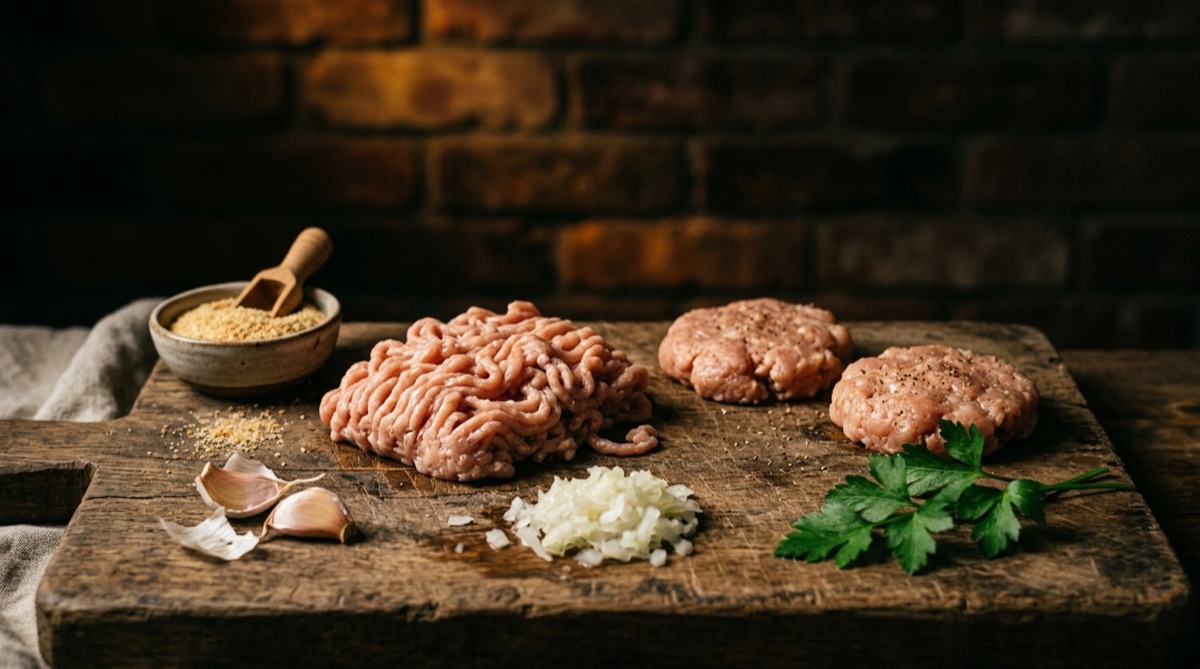
The first secret to a great chicken burger lies in the choice of meat. It’s not the same to use only breast as to mix it with thigh, and grinding, chopping by hand, or using a whole fillet all give different results. Here’s a comparison table so you can choose based on what you’re after:
| Type of meat | Juiciness | Fat | Best for |
|---|---|---|---|
| Ground breast (alone) | Low (dries out easily) | Very low (2–3%) | Fit versions, if well hydrated |
| Ground thigh | High | Moderate (8–10%) | Juicy, flavorful burgers |
| 50/50 breast + thigh mix | High | Medium (5–6%) | The perfect balance for almost everything |
| Hand-chopped | Medium-high | Variable | Rustic texture, ideal for the grill |
| Whole fillet (pounded breast) | Depends on thickness | Low | Breaded or griddled style |
My go-to recommendation: if you want a juicy burger that won’t fall apart, use a 50/50 mix of ground breast and thigh. The thigh adds fat and flavor; the breast provides structure. If you prefer something leaner, you’ll need to add ingredients that retain moisture (grated onion, a little olive oil, or even Greek yogurt). And if you’re up for hand-chopping, the texture changes completely—it’s closer to a kefta, perfect for the grill.
Basic Chicken Burger Recipe (the Starting Point)
Before you dive into the variations, you need a solid base. This is the recipe we use at the club as a starting point for almost all of our creations. It’s simple, but the details make the difference.
Basic ingredients (for 4 burgers, 5 oz / 140 g each):
| Ingredient | Amount |
|---|---|
| Ground chicken (50/50 breast-thigh mix) | 1 lb (450 g) |
| Egg (or egg white) | 1 whole (or 2 whites) |
| White onion, grated and drained | ¼ cup (60 ml) |
| Garlic, finely minced | 2 cloves |
| Salt | 1 tsp (5 g) |
| Ground black pepper | ½ tsp (2 g) |
| Breadcrumbs (optional, only if the mix is very wet) | 2 tbsp (15 g) |
Quick steps:
- Mix gently: in a bowl, combine the ground chicken with the egg, grated onion, garlic, salt, and pepper. Mix with your hands just until incorporated; don’t overwork it or the texture will become dense.
- Form the patties: divide the mixture into 4 equal portions. Shape the burgers about ¾ inch (2 cm) thick, with a small dent in the center (so they don’t puff up during cooking). Place them on a baking sheet lined with wax paper.
- Refrigerate for at least 30 minutes: this step is key. The cold helps the patty firm up so it doesn’t fall apart in the pan or on the grill.
- Cook: in a non-stick skillet or griddle over medium-high heat with a drizzle of oil, cook the burgers 4–5 minutes per side, until they reach an internal temperature of 165 °F (74 °C). Don’t press them down with the spatula.
- Rest: remove them from the heat and let them rest 2–3 minutes before assembling. This redistributes the juices.
This base is perfect for adding your own ingredients: herbs, cheese, spices, etc. But if you want to explore specific styles, keep reading.
Types of Chicken Burgers (Choose Your Style)
Here I present six styles that range from the healthiest to the most indulgent. Each one has its own complete guide where I dive deeper into ingredients, techniques, and tips. Pick the one that catches your eye.
Healthy / Fit
Ideal for those looking for a low-fat option without sacrificing flavor. It’s based on ground breast, substitutes egg whites for whole egg, and adds grated vegetables (zucchini, carrot) for moisture. Cooked in the oven or in a skillet with very little oil. → Full guide: healthy chicken burger
Crispy
The classic breaded chicken burger, “crispy chicken” style. A whole breast fillet (or shaped patty) is marinated in buttermilk, breaded with seasoned breadcrumbs, and fried until golden. Crunchy on the outside, juicy on the inside. → Full guide: crispy chicken burger
Grilled
Perfect for fans of smoky flavor. Made with a mix of thigh and breast, seasoned with spices (paprika, garlic powder, cumin), and cooked on a charcoal or gas grill. The secret is the cooking point and not moving the patty until a crust forms. → Full guide: grilled chicken burger
With Veggies for Kids
A fun way for little ones to eat vegetables without realizing it. Finely chopped spinach, grated carrot, and a little shredded cheese are added to the base mix. Made into smaller patties (3 oz / 85 g) and cooked in a non-stick skillet. → Full guide: chicken & veggie burgers for kids
Breaded
Similar to the crispy version, but with a thicker breading layer and sometimes baked instead of fried. Breadcrumbs are mixed with Parmesan cheese and herbs. Perfect for those who want the crunch without as much oil. → Full guide: breaded chicken burger
With Oats
A healthy, gluten-free alternative (if you use certified oats). Ground oats act as a binder instead of breadcrumbs, adding fiber. The mix includes ground breast, oats, egg, onion, and spices. Cooked in a skillet with little oil or in the oven. → Full guide: chicken & oat burgers
Common Mistakes (That Dry It Out or Break It Apart)
I’ve seen more than a few home cooks get frustrated with chicken burgers that turn out like shoe leather or fall apart in the pan. Here are the most frequent mistakes and how to avoid them:
- Overcooking: chicken cooks quickly. Going past 165 °F (74 °C) internally dries it out without mercy. Use a thermometer and remove it at the exact point.
- Using only breast without adding moisture: if you choose breast alone, add grated onion, Greek yogurt, or a little olive oil. Otherwise it’ll be dry.
- Not refrigerating the patties before cooking: raw mix is soft. Without at least 30 minutes in the fridge, the patties will crumble when handled.
- Pressing down with the spatula while cooking: this squeezes out the juices. Leave them still until they’re ready to flip.
- Skipping the rest after cooking: if you cut into them right away, the juices escape. Two minutes of rest make a big difference.
- Too much filler (onion, breadcrumbs, etc.): too many dry or wet ingredients throw off the balance. The rule is no more than ¼ cup of filler per pound of chicken.
Temperature and Safety
Chicken leaves no room for halfway measures. Unlike beef, where you can play with doneness (rare, pink, etc.), chicken must always reach an internal temperature of 165 °F (74 °C) to ensure any bacteria (like salmonella or campylobacter) are killed. There’s no safe medium.
Use a kitchen thermometer. Insert it into the center of the patty, avoiding contact with the pan. When it reads 165 °F (74 °C), remove it from the heat. If you don’t have a thermometer, cook until the juices run clear and the meat is completely white, but that’s less precise. Investing in a digital instant-read thermometer is the best decision you can make for cooking chicken.
How We Build It at Valerio Burger Club
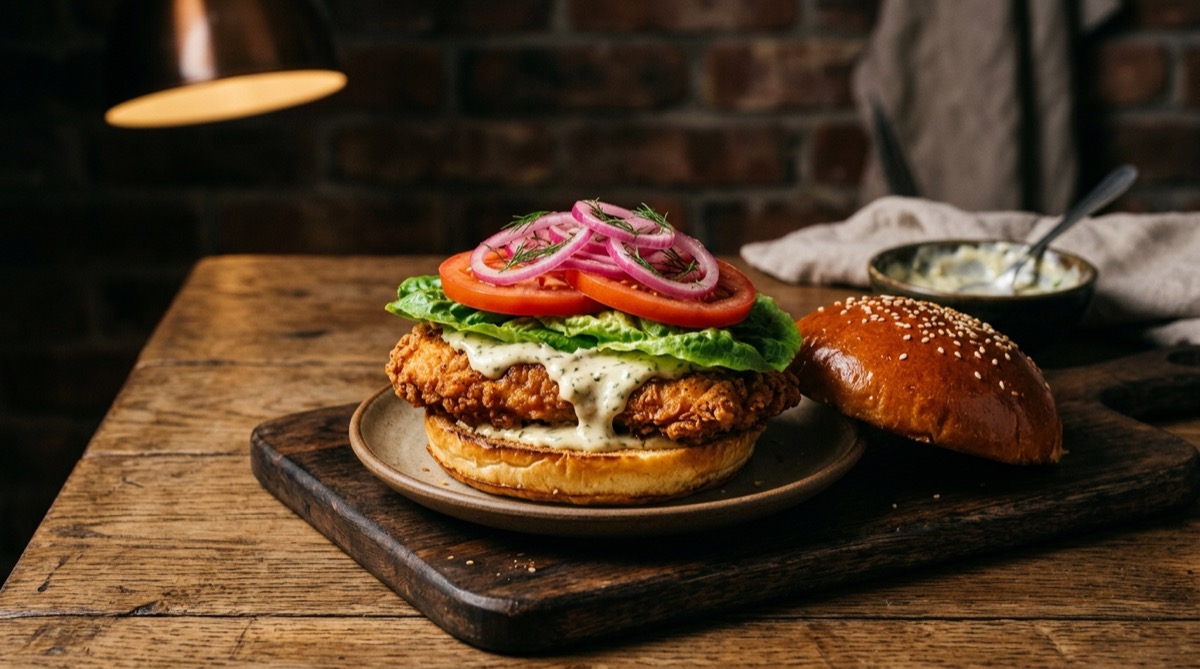
At our club, the chicken burger isn’t just a patty between two buns. We look for balance: a soft but firm bun (brioche or potato), a sauce that brings acidity or creaminess (garlic mayo, chimichurri, or sweet mustard), and fresh vegetables that add crunch (lettuce, tomato, pickled red onion). The key is that no element overshadows the chicken.
I invite you to explore the specific guides for each type I mentioned above. There you’ll find detailed recipes, step-by-step techniques, and tips to achieve that chicken burger you’ve always dreamed of. And if you come to Santo Domingo, stop by Valerio Burger Club and taste it live.
Frequently Asked Questions
What chicken is best for burgers?
The 50/50 mix of ground breast and thigh is the most balanced in juiciness and flavor. If you want something leaner, use only breast but add moist ingredients (onion, yogurt). Thigh alone gives a very flavorful but fattier burger.
How do I keep the chicken burger from drying out?
Don’t overcook it, use a thermometer, and if you’re working with pure breast, incorporate grated onion, a little olive oil, or even a crushed ice cube into the mix (it melts and adds steam). Also, don’t press it while cooking.
At what temperature do you cook chicken?
Always 165 °F (74 °C) in the center. There’s no “medium-rare” option. Use a kitchen thermometer to be safe.
Is a chicken burger less fattening than a beef burger?
It depends on the preparation. A chicken burger made with breast and cooked in the oven or on a griddle without oil has fewer calories and less fat than a conventional beef burger. But if you bread and fry it, the calories even out. In general, lean chicken is lighter.
Can I freeze the mix or the patties?
Yes, perfectly. Form the patties, place them separated with wax paper on a baking sheet, and freeze. Once solid, store them in an airtight bag for up to 3 months. To cook, no need to thaw: add 2–3 minutes of cooking per side.
From the blog to your table
In Santo Domingo? Don't read on an empty stomach.
Order your favorite burger from Valerio Burger Club and we’ll deliver it to your door. Beef ground daily, artisan buns and house-smoked meats.
Keep reading
 Guides
 How to Spell Hamburger (and the Misspellings to Avoid)
The correct spelling is 'hamburger' — H-A-M-B-U-R-G-E-R. Here are the most common misspellings, why it ends in -er, and where the word comes from.
 Guides
 Historic Places in the Dominican Republic: The Essential Guide
A guide to the historic places of the Dominican Republic: the Colonial City of Santo Domingo (a UNESCO World Heritage Site), the first cathedral in the Americas, Fortaleza Ozama and more.
 Guides
 What Is the Biggest Airport in the Dominican Republic?
The biggest airport in the Dominican Republic by traffic is Punta Cana (PUJ), with ~11 million passengers in 2025. Here's a clear guide to the country's airports.